Late and Loving It: The Sneaky ETA Formula Delivery Apps Use to Make You Feel Like a Winner
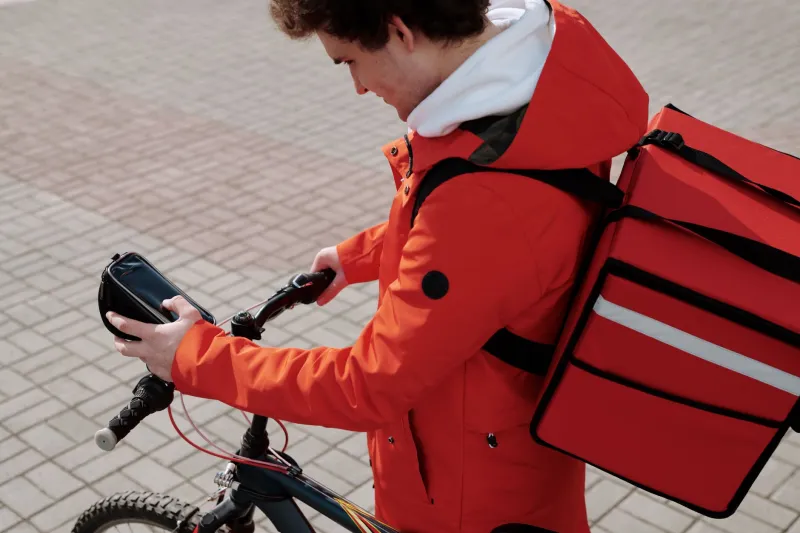
You ordered a burrito at 7:14 PM. The app said 48 minutes. It showed up at 7:51 PM. You felt like you'd won something. You hadn't. You'd been played — beautifully, mathematically, and with your full emotional cooperation.
Welcome to the world of delivery ETA engineering, where the formula isn't designed to be accurate. It's designed to be pleasing. That's a very different equation, and honestly? It's kind of genius.
The Buffer Is the Product
Here's the core mechanic that delivery platforms — DoorDash, Uber Eats, Grubhub, you name it — have quietly baked into their systems: deliberate padding. The actual estimated time from kitchen to door is calculated using a fairly standard logistics model. Distance, traffic, driver availability, restaurant prep speed — all of that goes into a base number. But then, before that number ever hits your screen, it gets inflated.
Why? Because of something behavioral economists call the peak-end rule. Humans don't judge an experience by its average — they judge it by how it ended. If your food arrives before the stated time, the entire experience feels positive, even if you waited the same amount of time in absolute terms. Apps aren't just tracking your order. They're engineering your emotional arc.
The formula looks something like this (roughly):
Displayed ETA = Base Logistics Estimate + Confidence Buffer + Restaurant Variability Cushion + Emotional Padding
That last variable is the wild card. It's not in any official documentation. But it's absolutely in the model.
The Variables Nobody Tells You About
Let's break down what's actually going into that ETA calculation, because it's way more complicated than "how far away is the driver."
Restaurant prep time is notoriously hard to pin down and wildly inconsistent. A burger joint on a Tuesday at 2 PM operates very differently than that same spot on a Friday at 8 PM. Delivery apps track historical prep times per restaurant, per hour, per day of week. They've got years of data telling them that Chipotle on a Saturday night runs about 11 minutes slower than their listed prep time. That gap gets baked in.
Driver assignment lag is another hidden variable. There's almost always a gap between when your order is placed and when a driver actually accepts it. Apps estimate this too, based on how many drivers are currently active in your zip code. Low driver density? Your ETA quietly stretches.
Traffic modeling uses real-time data, sure, but also predictive modeling. They're not just looking at current traffic — they're forecasting what traffic will look like in 20 minutes when the driver actually needs to make that turn onto your street.
And then there's the restaurant rating feedback loop. Here's where it gets devious. If a restaurant consistently gets bad reviews that mention late deliveries, the app increases that restaurant's padding in future ETAs. The restaurant's bad behavior essentially gets absorbed into the math, protecting the platform's overall rating without ever fixing the underlying problem. The restaurant looks slow. The app looks like a hero for managing your expectations.
You Are Also a Variable
This is the part that should make you feel a little watched, because you are.
Delivery platforms track your review behavior. If you're the type of user who leaves one-star reviews when food is late, your ETAs may be padded more aggressively than those of a user who never reviews anything. This is the personalization layer that most people don't realize exists. The app isn't just showing you an ETA — it may be showing you your ETA.
Some platforms have also been reported to factor in order complexity. A single item from a fast-casual spot? Tighter estimate. A seven-item order with modifications from a sit-down restaurant that also does delivery? The algorithm gives itself more runway.
And weather? Obviously. Rain adds minutes. Snow adds more. A surprise thunderstorm in July? The algorithm saw that coming before you looked out the window.
The "Beat the Clock" Illusion
Here's the psychological punchline: because the ETA is padded, a statistically significant portion of deliveries arrive early. This is not an accident. This is the whole point.
When your food shows up five minutes before the promised time, your brain doesn't think "the estimate was inflated." It thinks "that was fast!" You feel like you got away with something. You might even tip better. You almost certainly won't leave a bad review. The platform has converted a neutral experience — food arriving when it was supposed to — into a positive one, simply by anchoring your expectations slightly higher than reality.
It's the same trick that retail stores use when they say a sale ends Sunday and then extend it to Monday. Expectation management isn't just a soft skill. In the hands of a data science team, it's a precision instrument.
How to Game the Gamers
Now that you know the formula, you can start playing with it. A few strategies for the savvy orderer:
Order slightly before peak hours. The padding gets thicker during high-demand windows because variability increases. If you order at 5:45 PM instead of 6:15 PM, you're likely getting a tighter (and more accurate) estimate, and your food might actually arrive faster in absolute terms.
Check restaurant prep history. Some apps now surface average prep times in the restaurant detail view. A spot with a listed 10-minute prep time and a 4.2 rating has probably earned that rating partly through speed. A 3.8-rated spot with a "15-20 minute" prep window? Budget accordingly.
Don't anchor on the ETA. Treat it as a ceiling, not a promise. If you need food by 7:30 PM, order for a 7:15 PM ETA and you've got yourself a reasonable shot.
Track your own data. Seriously. If you order from the same spots regularly, start noting actual delivery times vs. stated ETAs. You'll quickly learn which restaurants are chronically optimistic and which ones the algorithm has already figured out.
The Formula Is Working on You Right Now
Every time you open a delivery app, you're stepping into a carefully engineered game where the house has stacked the emotional deck in its favor. The math isn't trying to tell you the truth — it's trying to make you feel good about the truth, whatever that truth turns out to be.
And honestly? Knowing the formula doesn't make it stop working. You'll still feel a little thrill when that driver shows up four minutes early. The algorithm knows that too.
Crack the code. Order smart. And maybe, just maybe, tip the driver who actually hustled — because they were never part of the equation to begin with.