Dopamine Dealer: How TikTok's Algorithm Turned Your Phone Into a Vegas Slot Machine You Can't Put Down
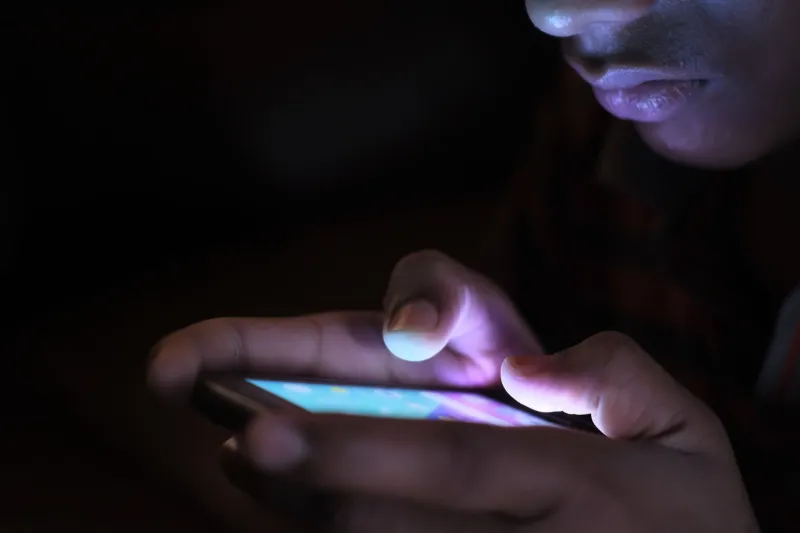
Let's play a quick game. Open TikTok. Scroll for what you think is five minutes. Now check your screen time.
Yeah. We'll wait.
If you just mouthed the words "oh no" at your phone, congratulations — you've experienced firsthand what behavioral scientists call a variable reward loop, and what the rest of us call the greatest heist ever pulled on the human attention span. TikTok didn't accidentally become the most-downloaded app on the planet. It was engineered that way, formula by formula, metric by metric, one algorithmically optimized dopamine hit at a time.
So let's crack the code.
The Slot Machine You Carry in Your Pocket
Here's something the casino industry figured out decades ago: the most addictive machines aren't the ones that pay out the most. They're the ones that pay out unpredictably.
This is called a variable ratio reinforcement schedule, and it's the psychological backbone of every slot machine from Reno to the Vegas Strip. Pull the lever, maybe you win, maybe you don't — but the possibility of winning is enough to keep you pulling. Your brain floods with dopamine not when you get the reward, but when you're anticipating it. The uncertainty IS the drug.
Now replace the lever with a swipe. Replace the jackpot with a hilarious video of a golden retriever failing to catch a frisbee. Replace the casino with your couch at midnight.
Welcome to TikTok.
Every single scroll is a pull of the lever. Most videos are fine — a three out of ten. Some are forgettable. But then, bam — a video that makes you laugh so hard you almost drop your phone. That's the jackpot. And your brain, bless its ancient reward-seeking heart, will keep scrolling forever just chasing that feeling again.
The Four-Variable Formula That Decides Your Fate
TikTok has never fully published its recommendation algorithm (shocking, we know), but based on what they have disclosed and what researchers have reverse-engineered, the 'For You' page operates on roughly four weighted engagement signals:
1. Completion Rate — Did you watch the whole video? Half of it? Did you bail at the two-second mark? This is arguably the most powerful signal in the formula. A video with a 90% average completion rate is basically rocket fuel for the algorithm. Creators know this, which is why every TikTok starts with either a hook, a question, or someone saying "wait for it" in the first half-second.
2. Replay Rate — Did you watch it again? Twice? Six times because you couldn't believe what you just saw? Replays are a massive green flag that tells the algorithm: this content is crack, distribute accordingly.
3. Engagement Actions — Likes, comments, shares, saves. Each one carries a different weight. Shares are the heavy hitter because they signal the content is good enough that someone wants to export it out of TikTok entirely, which is basically a five-star Yelp review for a video.
4. Negative Feedback Signals — This one people forget. Pressing "Not Interested," skipping immediately, or reporting content all feed the model too. The algorithm is constantly triangulating what you don't want as aggressively as it tracks what you do.
Throw all four of these into a machine learning model that's been trained on literally billions of user interactions, and you get a recommendation engine that knows your taste better than your best friend after six years of group chats.
Cold Start, Warm Trap
Here's where it gets genuinely impressive — and slightly terrifying. Most recommendation systems require a long history of user behavior before they can personalize effectively. Netflix took weeks to figure you out. Spotify needed months of listening data.
TikTok's algorithm can profile a brand-new user in under an hour.
This is called the cold start problem, and TikTok basically solved it. When you first create an account, the app serves you a carefully curated batch of high-performing content across wildly different categories — comedy, cooking, sports, fashion, ASMR, whatever. It's watching your micro-behaviors like a hawk. Did you pause on the cooking video? Did you replay the dog clip? Did you swipe past every single fitness post without a second glance? (Relatable.)
Within a few dozen swipes, the model has enough signal to start narrowing your content corridor. Within an hour, it's already built a probabilistic profile of who you are. By day three, it has a model of your preferences that's frankly unsettling.
The Engagement Spiral Nobody Talks About
Here's the part that doesn't get enough airtime: the algorithm isn't just optimizing for what you like. It's optimizing for what keeps you on the app longest.
Those are not always the same thing.
Research has shown that emotionally charged content — content that makes you angry, anxious, or deeply nostalgic — tends to drive longer session times than content that simply makes you happy. Happy content gets a like and a scroll. Outrage content gets a comment, a share, a subtweet, and fourteen minutes of reading the replies.
The algorithm doesn't have a moral opinion about this. It just sees the engagement numbers, and the engagement numbers say: serve more of that. Which is how a person who downloaded TikTok to watch funny cat videos can find themselves, three weeks later, deep in a content rabbit hole they never consciously chose to enter.
This is the part that makes it less like a fun puzzle and more like a formula that's running on you rather than for you.
Can You Actually Beat the Machine?
Here's the 4mulaFun challenge: is there a counter-strategy? Can you game the algorithm back?
Kind of, actually. Power users have figured out that aggressively using the "Not Interested" button, clearing your watch history, and deliberately engaging with content outside your comfort zone can meaningfully disrupt your content corridor. You're essentially introducing noise into your own behavioral data, which confuses the model long enough to reset some of its assumptions.
Other folks do a full account reset — nuke the history, start fresh — just to see what the algorithm serves when it knows nothing about them. It's basically a personality test administered by a machine, and the results are wild.
But let's be real: most of us aren't going to do any of that. We're going to open TikTok to watch one video and resurface forty-five minutes later wondering what happened to Tuesday evening.
The Formula Is Working Exactly as Intended
TikTok's 'For You' page isn't broken. It isn't a glitch. It isn't an accident. It is a precision instrument built by some of the smartest engineers on the planet, optimized to keep your eyeballs locked to a screen for as many minutes per day as mathematically possible.
The slot machine comparison isn't hyperbole — it's practically a technical specification. Variable rewards, unpredictable payout schedules, near-miss mechanics, and a feedback loop so tight it can profile a stranger in under an hour.
The difference between TikTok and a Vegas slot machine? Vegas has to comp you a buffet eventually.
TikTok just gives you another video.
Crack the code — or let the code crack you. The choice is yours. Probably. Maybe. Swipe to find out.