Shuffle Mode Lies: The Sneaky Formula That Keeps Serving You the Same Banger Over and Over
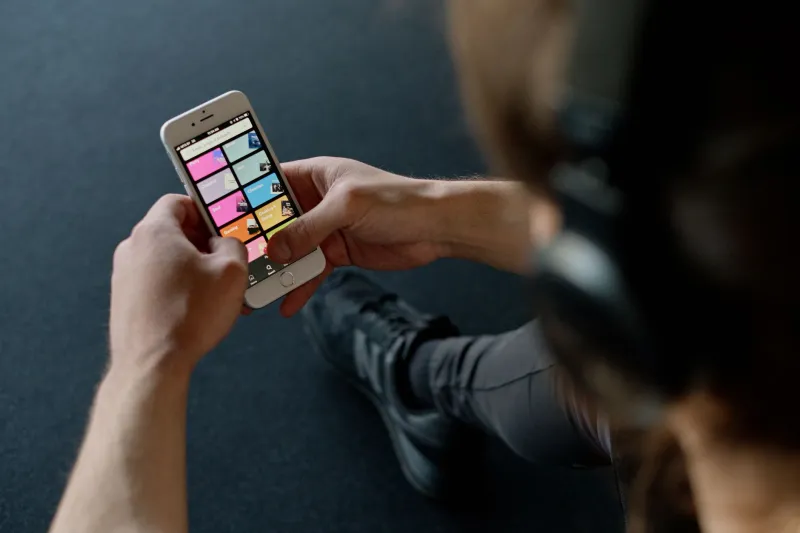
Picture this: You've got a meticulously curated 247-song playlist. A beautiful, sprawling monument to your impeccable taste. You tap shuffle. Forty-five minutes later, you've heard the same Olivia Rodrigo track twice, your three Tame Impala songs have all played back-to-back, and somehow your one embarrassing Nickelback addition has already shown up. Twice.
You're not cursed. You're not being pranked. You are, however, the victim of one of the sneakiest little mathematical sleight-of-hand tricks in modern tech. Welcome to the Playlist Paradox — where 'random' is a total lie, and the lie is actually doing you a favor.
True Randomness Is Actually Terrible
Here's the thing that breaks most people's brains: genuine randomness would feel absolutely broken.
Let's run the numbers. Imagine flipping a coin 100 times. True randomness doesn't guarantee you'll get 50 heads and 50 tails — you might get 63 heads in a row before a tail shows up. That's not rigged. That's just how probability actually works. It's messy, clumpy, and deeply unsatisfying to human beings who are pattern-recognition machines by design.
The same thing happens with music. If Spotify actually randomized your 300-song library with pure, unfiltered mathematical randomness, you'd statistically expect repeated songs, weird clusters of the same artist, and long droughts where entire genres go unplayed. You'd think the app was broken. You'd leave a one-star review. You'd tweet about it angrily.
So instead, streaming platforms built something smarter — and sneakier.
The Formula Behind 'Feels Random'
Back in 2014, Spotify's engineering team published a blog post that essentially admitted the whole thing. Their original shuffle algorithm was mathematically random. Users hated it. Complaints flooded in about hearing the same songs repeatedly. So Spotify did something counterintuitive: they made their shuffle less random to make it feel more random.
The new system uses a technique sometimes called spread shuffling or weighted distribution. Here's the basic formula in plain English:
- Divide your playlist into equal buckets based on artist or genre.
- Space out songs from the same artist so they never appear too close together.
- Weight popular tracks higher so they cycle in more frequently.
- Guarantee no immediate repeats within a defined window.
The result? A shuffle that feels satisfyingly varied — even though it's being quietly manipulated behind the scenes like a Vegas card dealer who makes sure you win just enough to stay at the table.
Apple Music and YouTube Music play the same game with slight variations. Apple's algorithm factors in your listening history to bump up tracks you've played more often. YouTube Music leans on engagement data — songs you've rewound or saved get a statistical leg up in the rotation lottery.
Why You Keep Hearing the Same 12 Songs
So if the algorithm is designed to avoid repetition, why does your shuffle still feel like it's obsessed with a tiny fraction of your library? A few culprits:
The Popularity Bias. Every platform quietly ranks your songs by how often you've played them. Tracks you've streamed 47 times get weighted heavier than the deep cut you added last Tuesday and played once. The algorithm is essentially reading your own listening history back to you and saying, "You seem to like this one." It's not wrong. It's just annoying.
The Recency Effect. Songs you've added recently often get a temporary boost in rotation — a kind of algorithmic honeymoon period. This is why that new album you just loaded onto a playlist seems to dominate shuffle for the first week.
The Library Size Problem. Here's some cold math: if you have a 50-song playlist and a shuffle window that prevents repeats within 20 songs, you're basically cycling through the same 20-song rotation constantly. The smaller your playlist, the more frequently you'll hit familiar tracks. The paradox deepens — the more you love a playlist, the smaller and more curated it tends to be, which means tighter loops.
The Artist Clustering Trap. Even with spread shuffling, if 40 of your 200 songs are from one artist (looking at you, Taylor Swift completists), that artist is going to appear proportionally more often. The algorithm spaces them out, but math is math.
Your Brain Is Also Part of the Problem
Here's where it gets really fun. Even when the algorithm does serve up a genuinely diverse spread, your brain is actively conspiring against the illusion of randomness.
Psychologists call it the clustering illusion — humans are hardwired to notice patterns and remember clusters of similar events while completely ignoring the stretches of variety in between. You remember hearing "Blinding Lights" twice. You don't consciously register the 14 different artists you heard between those two plays.
Your brain is essentially keeping score on the wrong things and filing a complaint with the wrong department. The algorithm isn't broken. Your pattern-detection software is just running in overdrive — which, honestly, was a great feature back when we needed to notice whether that rustling in the bushes was a squirrel or a sabertooth tiger.
Less useful when you're just trying to enjoy your commute playlist.
Can You Actually Beat the Algorithm?
If you want to game the system and get something closer to true variety, here are a few cheat codes:
- Build bigger playlists. The more songs in the pool, the wider the shuffle spread. A 500-song playlist behaves very differently than a 30-song one.
- Use the 'Liked Songs' shuffle on Spotify. With thousands of tracks, the algorithm has more room to breathe and genuinely diversify.
- Manually reorder and re-save playlists. Some users swear that refreshing a playlist's metadata resets its weighted rotation.
- Try third-party tools. Apps like Playlisty or Soundiiz offer alternative shuffle logic that can break the platform's default weighting.
Or, and bear with us here — just make peace with hearing "Mr. Brightside" three times. At this point, it's basically a personality trait.
The Paradox, Solved
The Playlist Paradox boils down to this: humans say they want randomness, but what they actually want is the feeling of randomness without any of randomness's genuinely chaotic behavior. We want variety without surprise. Novelty without unpredictability. The streaming platforms figured this out and quietly built algorithms that deliver exactly that — a carefully managed illusion of spontaneity.
It's the same formula casinos use to keep slot machines feeling exciting, the same trick Netflix uses to surface shows you didn't know you wanted, and the same logic behind why your social media feed feels fresh even when it's serving you the same five content creators on rotation.
Random was never really the goal. Satisfying was.
And if that means hearing "Bohemian Rhapsody" for the fourth time this week? Well. The algorithm has spoken. Don't fight it.