Jackpot Delusion: The Cold, Brutal Math Behind Every Lottery Ticket You've Ever Bought
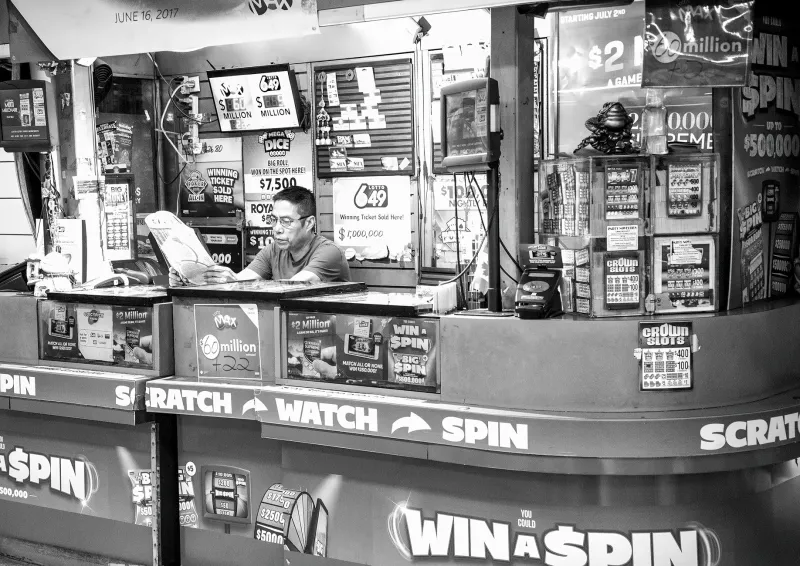
It happens every single time. The Powerball jackpot climbs past $600 million, and suddenly your coworker who once failed a basic tip calculation is confidently explaining how he'd "diversify his portfolio." You buy a ticket. Your spouse buys a ticket. The gas station cashier buys a ticket. For approximately 72 hours, America collectively loses its grip on probability.
That's not an accident. That's the formula working exactly as designed.
Welcome to the most profitable, most psychologically ruthless, and most mathematically lopsided game in the entire country — and yes, it's absolutely a game. It just happens to be one where the house doesn't just have an edge. The house is the edge, the table, the cards, and the guy collecting your chips.
The Number That Should End the Conversation (But Never Does)
Let's rip the bandage off fast. Your odds of winning the Powerball jackpot are approximately 1 in 292,201,338. That's not a typo with an extra zero or two. That's two hundred and ninety-two million to one.
To put that in terms your brain might actually process: you are roughly 250 times more likely to be struck by lightning twice in your lifetime than to win the Powerball. You're more likely to be canonized as a Catholic saint. You are statistically more likely to be killed by a vending machine.
The formula behind that number is a classic combinatorics equation — specifically a combination formula:
C(n, r) = n! / (r!(n-r)!)
For Powerball, you're choosing 5 numbers from 69 white balls and 1 Powerball from 26 red balls. Plug those into the formula and you get your 292 million-to-one gut punch. The math doesn't care about your feelings. It never did.
How the House Guarantees It Always Wins
Here's where it gets genuinely impressive, in a diabolical sort of way. State lotteries are legally required to maintain what's called a payout percentage, and most hover somewhere between 50 and 65 cents returned for every dollar spent. That means on every dollar you hand over, the lottery is pocketing at least 35 cents before a single ball drops.
Compare that to a Vegas slot machine, which typically returns 85–95 cents on the dollar. The lottery is, mathematically speaking, a significantly worse bet than a slot machine — which is saying something, because slot machines are already engineered to vacuum your wallet with a smile.
The formula that keeps lottery commissions sleeping soundly at night is called expected value (EV):
EV = (Probability of Winning) × (Prize Amount) − (Probability of Losing) × (Ticket Cost)
Run the actual numbers on a $2 Powerball ticket when the jackpot is $300 million and you get a deeply negative expected value — usually somewhere around negative $1.30 to $1.60 per ticket once you factor in taxes, the lump sum reduction (which cuts the advertised jackpot roughly in half), and the very real possibility of splitting the prize with other winners when jackpots go viral.
In other words: the bigger and more exciting the jackpot gets, the more tickets get sold, the worse your expected value becomes. The lottery literally gets more rigged the more popular it is. Incredible.
Your Brain Is the Real Jackpot (For Them)
So why does any rational human being keep buying tickets? Because rationality is apparently optional when dopamine shows up to the party.
Lotteries exploit two deeply embedded psychological quirks with surgical precision.
The first is called availability heuristic — your brain judges the likelihood of an event by how easily you can picture it happening. You've seen a lottery winner on the news. You've watched the crying, the giant novelty check, the interview about buying a boat. Your brain files that under "this definitely happens to real people" and conveniently ignores the 292 million people who didn't get a camera crew.
The second is loss aversion flipped on its head. Normally, humans hate losing more than they love winning. But lottery marketers figured out a workaround: make the ticket so cheap that the "loss" feels negligible. Two dollars isn't a loss — it's the price of a daydream. You're not gambling, you're purchasing a fantasy, and fantasies are famously underpriced.
The scratch-off industry takes this even further by engineering near-miss experiences — tickets that show two matching symbols and then a tantalizingly close third. Your brain registers that near-miss almost identically to an actual win, triggering a dopamine response that sends you straight back to the display rack.
The "Somebody Has to Win" Trap
This is the lottery's most elegant piece of psychological judo, and you've almost certainly used it to justify a purchase. "Somebody has to win, right? Why not me?"
Technically true. Functionally meaningless.
Yes, somebody wins. Eventually. After sometimes hundreds of millions of tickets are sold. The existence of a winner doesn't change your individual odds by a single decimal point. Your ticket still has a 1-in-292-million shot regardless of whether the jackpot has been rolling for three weeks or three years.
This is called the Gambler's Fallacy — the mistaken belief that past events influence future independent probabilities. Every drawing is a fresh 292-million-to-one proposition. The universe does not owe you a win because it's been a while.
When Does a Lottery Ticket Ever Make Sense?
Short answer: almost never, mathematically. But here's the nuanced version that won't make you feel like a complete fool for ever buying one.
If you genuinely treat the $2 as a pure entertainment purchase — the same way you'd spend two bucks on a song download or a mediocre app game — then the transaction is actually fair. You bought a few hours of pleasant "what if" daydreaming. That has real psychological value, even if it has zero expected financial value.
The danger zone is when the ticket becomes a financial strategy rather than an entertainment expense. The lottery disproportionately extracts money from lower-income households — studies consistently show that people earning under $30,000 annually spend a significantly higher percentage of their income on lottery tickets than wealthier demographics. When hope becomes a substitute for a savings account, the formula stops being just a math problem and starts being a policy problem.
The Formula You Should Actually Be Running
Next time the Powerball jackpot lights up like a Vegas marquee and your coworker is already designing his new yacht, try running this back-of-the-napkin reality check:
- Take the advertised jackpot.
- Cut it in half (lump sum reduction).
- Cut it by roughly 37% again (federal taxes).
- Divide by your odds of winning.
- Compare that number to $2.
The result will be, with near-certainty, a number that makes your ticket look like a spectacular waste of money. And you might buy it anyway. Because the formula for human hope has always been a little resistant to arithmetic.
And honestly? The lottery industry is counting on exactly that.
Play smart, dream big, and maybe — just maybe — put the other $2 in a high-yield savings account. Your future self will thank you. Probably.