Love at First Algorithm: How Dating Apps Turned Romance Into a Rigged Math Game
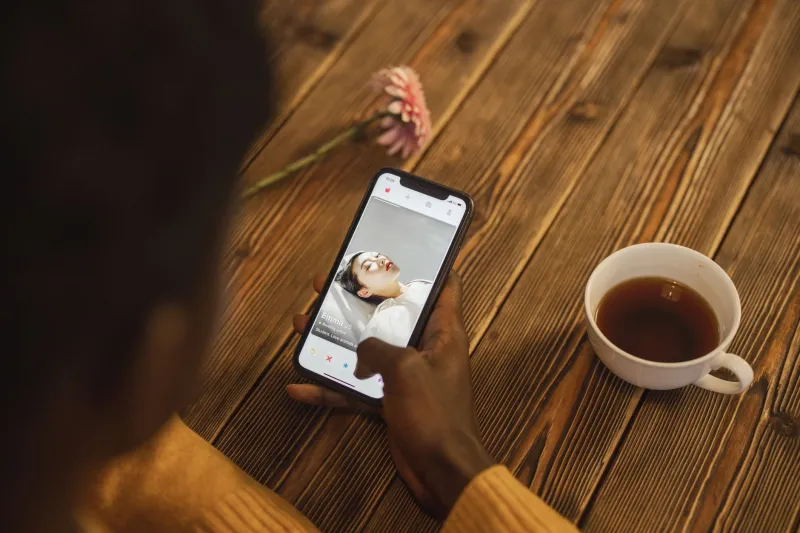
Congratulations. You've spent forty-five minutes picking your best photos, crafting a bio that somehow makes "I like hiking and dogs" sound original, and you've officially launched yourself into the digital dating arena. You feel good. Optimistic, even.
Then three days pass. Crickets.
Here's the uncomfortable truth nobody puts in the app store description: you didn't just join a dating platform. You enrolled in a competitive ranking system built on decades of mathematical theory, behavioral psychology, and cold-blooded optimization logic. Welcome to the Swipe Economy — where love is a leaderboard, and the algorithm is the house.
The ELO System: Chess Ratings for Your Cheekbones
Let's start with the engine that launched a thousand dating-app careers: the ELO rating system. Originally designed in the 1950s by physicist Arpad Elo to rank chess players, ELO assigns every user a hidden score that fluctuates based on how other users interact with their profile.
Tinder famously (and eventually infamously) used a version of this system in its early years. The basic mechanic works like this: when a highly-rated user swipes right on you, your score goes up more than it would if a lower-rated user did the same. When a highly-rated user skips you? Ouch. Your score takes a hit. It's exactly like beating a grandmaster versus beating someone who just learned how the horsie moves.
The result? A hidden chess tournament happening underneath every casual swipe. Your "Elo score" — or whatever proprietary equivalent the app currently uses — determines which profiles get shown to which users. High scorers get served to other high scorers. It's digital matchmaking, sure, but it's also very much a ranking bracket.
Tinder has since claimed they moved away from pure ELO toward a more complex system. Which brings us to the next level of the game.
Preference-Weighting: The Algorithm Learns Your Type (Whether You Like It or Not)
Modern dating apps don't just track whether you swipe right — they track who you swipe right on. Over time, the system builds a surprisingly detailed map of your preferences: age ranges, photo styles, apparent activity levels, even facial feature patterns detected through image recognition.
Hinge, which markets itself as "designed to be deleted" (an absolutely wild sales pitch when you think about it), leans heavily into this preference-modeling approach. Their algorithm watches your behavior like a hawk. If you consistently engage with profiles that include outdoor photos, the system starts surfacing more of those. If you always skip people whose bios mention astrology, the algorithm quietly takes notes.
This creates what data scientists call a feedback loop — and what the rest of us call a rabbit hole. The more you interact, the more the algorithm narrows its model of your "ideal match," which can either surface genuinely compatible people or lock you into an increasingly specific filter bubble. Either way, the formula is running the show.
The Supply and Demand Problem Nobody Talks About
Here's where the math gets genuinely uncomfortable. Dating apps, like most platforms, have a significant gender imbalance. Studies consistently show that on heterosexual dating apps, women receive exponentially more matches than men on average — sometimes by a factor of 10 to 1 or higher.
This creates what economists would recognize as a classic supply and demand imbalance. When demand for a limited resource (matches, attention, responses) vastly outpaces supply, the platform has to ration that resource somehow. The algorithm becomes the rationing mechanism.
For users on the lower end of the match distribution, the system can feel genuinely Kafkaesque — swiping endlessly with minimal feedback, never quite sure if the problem is the photos, the bio, the timing, or just the invisible score hovering over their head like a dunce cap made of ones and zeros.
For the platform, though? This imbalance is a feature, not a bug. Users chasing matches are engaged users. Engaged users see ads, buy premium subscriptions, and pay for "boosts" that temporarily inflate their visibility score. The math of romance has been quietly converted into the math of recurring revenue.
Boosts, Super Likes, and the Pay-to-Win Layer
Speaking of which — let's talk about the monetization layer sitting right on top of the matchmaking formula. Every major dating app has some version of a premium tier that essentially lets you buy algorithmic advantages.
Tinder's "Boost" feature temporarily bumps your profile to the top of the stack for nearby users. Bumble has a similar "Spotlight" mechanic. Hinge offers "Roses" — a premium signal that carries more algorithmic weight than a standard like. These aren't cosmetic upgrades. They are literal score multipliers injected directly into the ranking system.
Translated into gaming terms: it's a pay-to-win mechanic dropped into the middle of what users were told was a fair matchmaking environment. You're playing the same game as everyone else, except some players bought the power-up pack at the in-app store. The formula hasn't changed — you've just been outspent.
Can You Actually Crack the Code?
Okay, so now that we've thoroughly demystified the romance machine, the obvious question is: can you game it? Sort of — but with caveats.
A few things the research and user experimentation consistently suggest:
- Early activity matters. New profiles often get an algorithmic "honeymoon boost" to generate initial engagement data. Your first 24–48 hours on the app may be your highest-visibility window.
- Photo quality has outsized weight. Apps use engagement rates on your photos as a core signal. A single genuinely great photo can outperform five mediocre ones.
- Selectivity can improve your score. Counter-intuitively, mass swiping right can hurt your algorithmic standing on some platforms, because low selectivity signals low-quality engagement to the system.
- Response rate counts. On apps like Hinge, how often you respond to messages — and how quickly — factors into your overall ranking.
But here's the honest kicker: even if you optimize every variable, you're still playing inside a system designed to keep you playing. The formula isn't built to find you a partner as efficiently as possible. It's built to keep you swiping long enough to justify the server costs.
The Wildcard the Algorithm Can't Quantify
All of this math — the ELO ratings, the preference weighting, the behavioral modeling — is genuinely impressive engineering. But it runs into a fundamental problem that every dating app quietly knows and refuses to advertise: human chemistry doesn't compress into a dataset cleanly.
The spark that makes two people actually work together involves timing, context, shared history, and variables so chaotic that no algorithm has cracked them yet. The app can put two statistically compatible people in front of each other. What happens next is still stubbornly, gloriously human.
Which means the real formula for dating success is only partially written in code. The rest of it? You're going to have to figure that one out yourself.
Good luck. And maybe lead with a better opening line than "hey."