The House Always Knows: Cracking the Probability Code Behind Every Casino Game
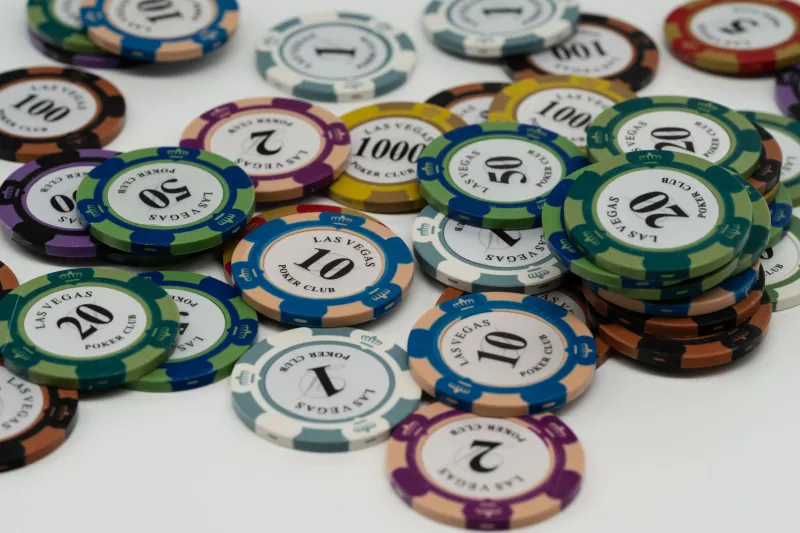
Let's get one thing straight before we go any further: the casino is not your friend. It is not rooting for you. It did not build that glittering palace of free drinks and oxygen-pumped air because it enjoys your company. The casino is a math machine wearing a tuxedo, and every game on that floor is a formula designed — with extraordinary precision — to take your money slowly enough that you don't notice until it's gone.
But here's the fun part: the formula is knowable. And knowing it changes everything about how you play.
The Concept That Runs Every Game: The House Edge
Every casino game operates on a principle called the house edge — the mathematical percentage of each bet the casino expects to keep over time. Think of it as the casino's cut, baked directly into the rules of the game before you've even sat down.
The basic formula looks like this:
House Edge = (Expected Casino Winnings ÷ Total Amount Wagered) × 100
This number varies dramatically depending on the game, and understanding it is the single most useful thing any casual player can do before setting foot on a casino floor. Let's break down the big three.
Slot Machines: The Prettiest Trap in the Building
Slot machines are the most popular games in American casinos, and it's not a coincidence that they're also among the worst bets you can make. The house edge on a typical slot machine runs anywhere from 2% to 15%, with many machines sitting comfortably in the 5–10% range.
Here's what that means in plain language: for every $100 you feed into a slot machine over time, you can statistically expect to lose $5 to $10. Every session. Every time.
The formula slots use to keep you playing is almost diabolically clever. It's called variable ratio reinforcement — a psychological mechanism where rewards come unpredictably. You don't know which pull will pay out, which makes every pull feel like it could be the one. Your brain's dopamine system absolutely loves this, which is why people sit at slot machines for hours in a state of glazed, hopeful attention.
The math doesn't care about your hope. The math just runs the numbers.
Smarter play tip: If you're going to play slots, look for machines with a published Return to Player (RTP) percentage above 95%. That cuts the house edge to roughly 5% or less, which won't make you rich but will make your entertainment budget last longer.
Roulette: Spinning a Wheel of Honest Deception
American roulette is one of those games where the house edge is almost insultingly visible once you see it. The wheel has 38 pockets: numbers 1 through 36, plus a 0 and a 00. If you bet on a single number and win, you get paid 35 to 1.
But wait — there are 38 possible outcomes, not 36. That gap is the entire formula.
House Edge on American Roulette = 2 ÷ 38 × 100 = 5.26%
Those two extra pockets (0 and 00) are the casino's silent tax on every spin. European roulette, for comparison, only has a single zero, dropping the house edge to about 2.7%. If you have a choice between the two versions, this is not a close decision.
The beauty — and the brutality — of roulette is that it's completely random. No strategy changes the underlying probability. Each spin is independent of the last. The wheel doesn't remember that red has come up seven times in a row. It genuinely does not care.
Smarter play tip: Stick to outside bets (red/black, odd/even) if you want to maximize your time at the table. The house edge is the same, but the near-50/50 odds mean your bankroll erodes more slowly, giving you more spins for your dollar.
Blackjack: The One Game Where Your Brain Actually Matters
Now we're talking. Blackjack is the rare casino game where player decisions genuinely affect the outcome — which means the house edge isn't fixed. It slides based on how well you play.
A player using basic strategy (a mathematically optimal set of decisions for every possible hand) can reduce the house edge to as low as 0.5%. That is, by casino standards, almost shockingly fair. A player winging it based on vibes and gut feelings? They're looking at a house edge closer to 2–4%.
Basic strategy isn't magic. It's a formula — a lookup table, essentially — that tells you the statistically correct move for every combination of your cards versus the dealer's up card. Hit, stand, double down, split. Every scenario has a mathematically superior answer, and that answer has been calculated.
The formula for expected value in blackjack looks like this:
EV = (Probability of Winning × Amount Won) − (Probability of Losing × Amount Lost)
When you deviate from basic strategy, you're voluntarily making that EV number worse. You're essentially donating extra money to the casino because the hand felt like it needed a hit.
Smarter play tip: Download a basic strategy card before your next casino visit. Many casinos actually allow you to use one at the table — they know most people won't bother. Be the person who bothers.
The Meta-Formula: Managing the One Variable You Control
Here's the thing none of these game-specific formulas can fix: time. The longer you play, the more the house edge grinds you down. This is called the law of large numbers, and it's the casino's most powerful ally. In the short run, anything can happen. In the long run, the math wins.
The one variable entirely in your control is your bankroll management — specifically, how long you play and how much you bet relative to what you brought.
A simple framework:
- Set a hard loss limit before you walk in.
- Treat gambling as entertainment spending, not investment.
- When you're up, consider it a win and protect some of it.
- Never chase losses. The formula does not reset because you're frustrated.
Play With Your Eyes Open
At 4mulaFun, we believe knowledge is the best cheat code there is. You're not going to beat the house over the long run — the formula genuinely won't allow it. But you can walk into any casino in Las Vegas, Atlantic City, or anywhere else with a clear understanding of the math running the show.
That's not a guarantee of winning. It's something better: it's playing the game on your own terms, with full awareness of the puzzle you're actually solving.
And honestly? That's way more fun than just hoping the slot machine likes you today.